


Right now the publishing industry is imploding over a five-alarm problem: AI-generated submissions. They are often reporting AI-gen submissions in the hundreds.
I get the complaint. Editors already have overflowing submission queues and nobody wants to spend hours reading mass-produced stories someone generated and sprayed across a hundred markets. We are writers ourselves, and have spent our best years hunched over our computers to hone our craft. We have paid for the privilege with missed social lives, sweat and many, many tears.
In spite of what you may have heard, I am not, and have never been, supportive of AI-generated creative work. I am more mystified by why anyone who wants to be a writer would bother. Is it for the pittance or the pride? There doesn’t seem to be much of either in it.
For context, in 2023 Space & Time published an experimental AI Discovery Issue exploring how writers and artists were actually using these new tools. It was controversial then, and I still think the best response to controversy is examination rather than hearsay. So I’m making the ebook edition of Issue No. 144 free for anyone who wants to read the experiment and make up their own mind. Use code C4URSELF for 100% off: https://authortunitiespress.com/b/eb-144
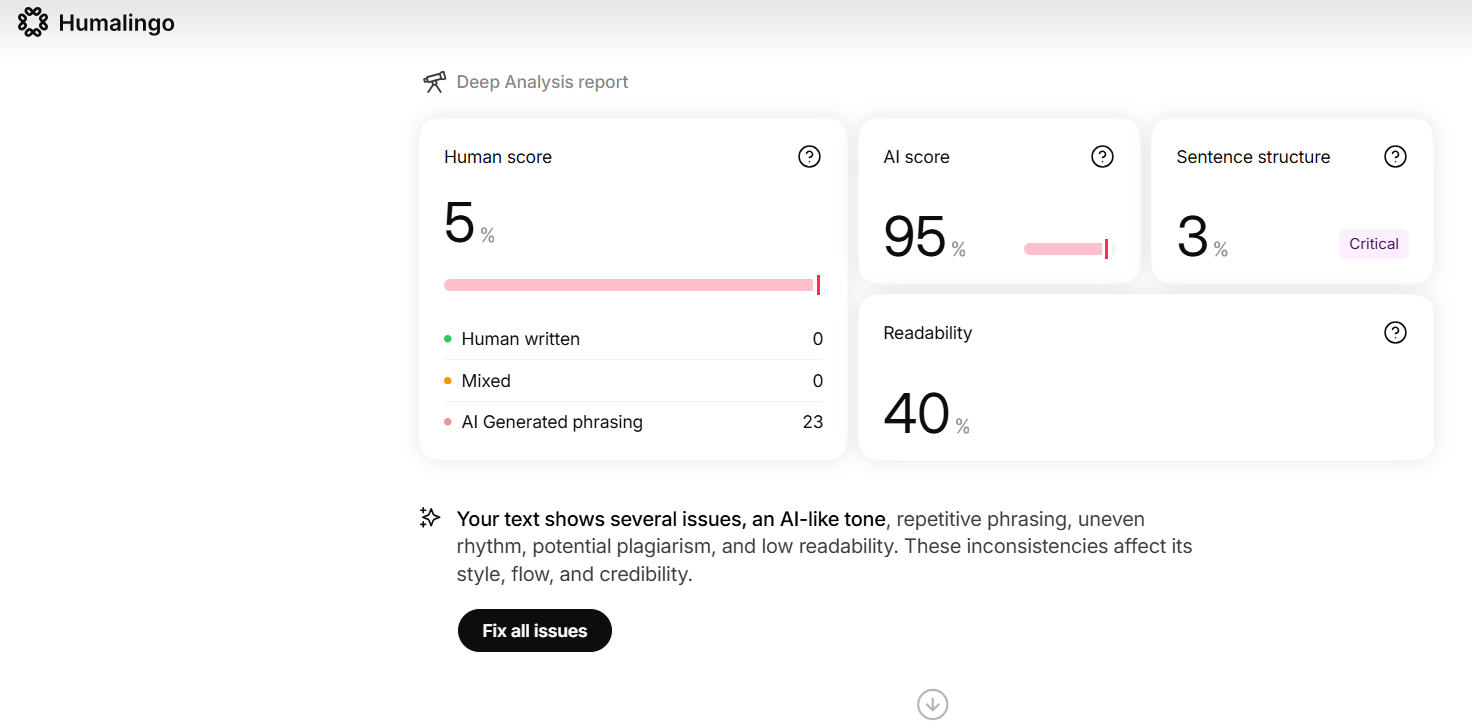
What is sending cold shivers down my spine is when I ask how they knew for sure it was AI-gen: The detector caught them.
I don’t think the publishers reporting this problem are lying and I am not going to claim AI detectors are useless. Every publication is within their rights to protect themselves from AI or any other kind of spam.
The question burning in my mind is much simpler.
What, exactly, did the tool establish?
And maybe more importantly:
What are we justified in doing with that information?
Recognize When Information Starts Feeling Like Judgment
I think there’s a slippery slope here, and it extends far beyond AI detectors. We tend to trust things that give us numbers. We live for scores, percentages, graphs, rankings… many of us spend far too many creative hours deciphering an analytics dashboard. Numbers reassure us.
If a tool tells us a manuscript is 87% something, that feels more substantial than saying, “Something about this manuscript makes me suspicious.”
One sounds like an opinion, but the other sounds like evidence. That can be comforting, but tools shouldn’t eliminate our human discernment. They give us information, but that information still requires us to make the final call.
An AI detector can identify patterns its system associates with generated writing, but it doesn’t automatically tell you what the information means.
That’s our job as humans, and that’s where discernment comes in.
Reimagine Humans as the Decision-Maker
This becomes especially important when the stakes rise. Imagine an editor uses an AI detector as one signal that a manuscript deserves a closer look. Fair enough.
Now imagine the detector’s result becomes the sole reason an author is permanently banned. Those aren’t the same use of the tool. The information hasn’t changed, just the consequence.
To be accused of your story being written by AI is emotionally devastating. It is already hard enough to write a story, silence the imposter and submit it. Artists pull themselves apart to create. To be banned is a serious consequence, and that means the amount of certainty we require ought to change with it.
The greater the consequence, the stronger the evidence should have to be.
This is not an argument against using tools but a plea for using them with discernment. There’s an irony in publishing right now. We’re worried about algorithms replacing human creators, so we need to be very careful that our solution isn’t allowing an algorithm to determine which writers are human.
Build Your Discernment Checklist
This month’s theme is Sharpen Your Tools, and I think discernment may be one of the most important tools we can sharpen. Before I make an important decision based on what a tool tells me, I want to consider five things.
1. Signal
What is the tool actually telling me?
Not what I think it means or what social media is telling me it means… What did it actually measure?
“87% AI” and “this system identified linguistic patterns associated with generated text” are psychologically very different statements. The first feels like a verdict. The second one is inconclusive.
2. Context
What else could reasonably produce this result?
This is the part where we resist the seductive first explanation. Could an editing tool have affected the prose? Could someone’s writing style simply be unusually regular because of neurodivergence or the first language literacy? Could the sample be too small? Could the metric be measuring something adjacent to the thing I actually care about?
Finally, what incentives does the company behind the tool have, and could those incentives influence how it presents risk, certainty, or accuracy?
3. Corroboration
What independent evidence supports the conclusion? One tool agreeing with itself isn’t corroboration. What else do I know? What else can I observe? Do multiple independent pieces of evidence point in the same direction? Have I tested the accuracy with my own work, and other verified human created work?
4. Consequence
What happens if I’m wrong? This is the most important question. A false positive and a false negative don’t necessarily have equal costs, and neither does choosing the wrong headline and accusing someone of dishonesty.
The more serious the consequence, the more carefully I want to examine what I’m relying on.
5. Confidence
Finally: Is the evidence I have strong enough for the action I’m about to take?
If I accuse this person of using AI-gen to create this story, what is the consequence? Am I willing to take that step if this is a false positive? Does my confidence match the consequence?
My personal answer is no. I will not use AI to test if someone’s work is AI so that I can punish them, especially when there are too many false positives.
Become the Writer Who Doesn’t Outsource Judgment
There’s another consequence of AI detection that bothers me even more than false accusations: what happens when writers become so afraid of being accused that they begin adapting their writing for the detectors?
Imagine writing every word of a story yourself, running it through a detector and seeing: LIKELY AI-GENERATED. Even though you wrote this, you might panic.
So you change a sentence. Scan again. Remove the em dashes. Break that beautifully balanced sentence because apparently beautifully balanced sentences are tells of AI-gen now. Eventually the detector might give you a green light. Congratulations. You’ve successfully convinced a machine you’re human.
In the quest for human writing, the writer stopped writing for the reader and started writing for the detector. What happens to literature when we’re so afraid of being mistaken for AI that we start altering human writing to satisfy a machine’s definition of human?
The goal isn’t to let machines think for us. The goal also isn’t to let machines create for us. It’s to let them do the tedious, non-creative tasks so we can do what we are made for: making.
That’s true whether the tool is an AI detector, an editing program, an analytics dashboard, a style guide, a publishing expert, a social platform, or an AI assistant. Useful tools extend our abilities, but they should never replace our responsibility to think for ourselves.
I’m continuing this conversation in the Authortunities community so we can share personal experiences and reimagine what is possible.
What are your thoughts and experiences with AI detectors?
JOIN THE PRIVATE COMMUNITY CONVERSATION
or leave a comment on Substack.

News from the Authortunities Ecosystem
📅· The Authortunities Calendar is updated!
🎙️· This week on Reading Space & Time, we will be sharing two more stories and two more poems from the just released August issue No. 153, namely “My old pen” by Simbarashe Chirikure, “Just Tell Me No” by Blake Jessop, “Sharpen Your Tools” by Saroj Kumar Senapati, “Bravo Checkpoint” by P. M. Alexander and “City of Diamonds” by Hallie Rae.
🛠️· Join the conversation about this week’s post in the free Authortunities NeighborHub at authortunitieshub.com.
🔥 · This week from Authortunities Press: All issues of Space & Time up to No. 111 are now available, including No. 120 Spring 2014, in which Nicky Drayden’s “The Simplest Equation” was selected and performed by LeVar Burton for LeVar Burton Reads in August 2019. Check out the selection of Space & Time magazines available at https://authortunitiespress.com/collection/space-time.
AUTHORTUNITIES · ISSUE 180 · AUGUST 2026
Recognize · Reimagine · Build · Become
Calendar · NeighborHub Community · Space & Time · Reading Space & Time Authortunities Almanac 2027 · Authortunities Press
THIS WEEK: BUILD


