

Rest as Resistance
Why rest feels earned—and what that reveals

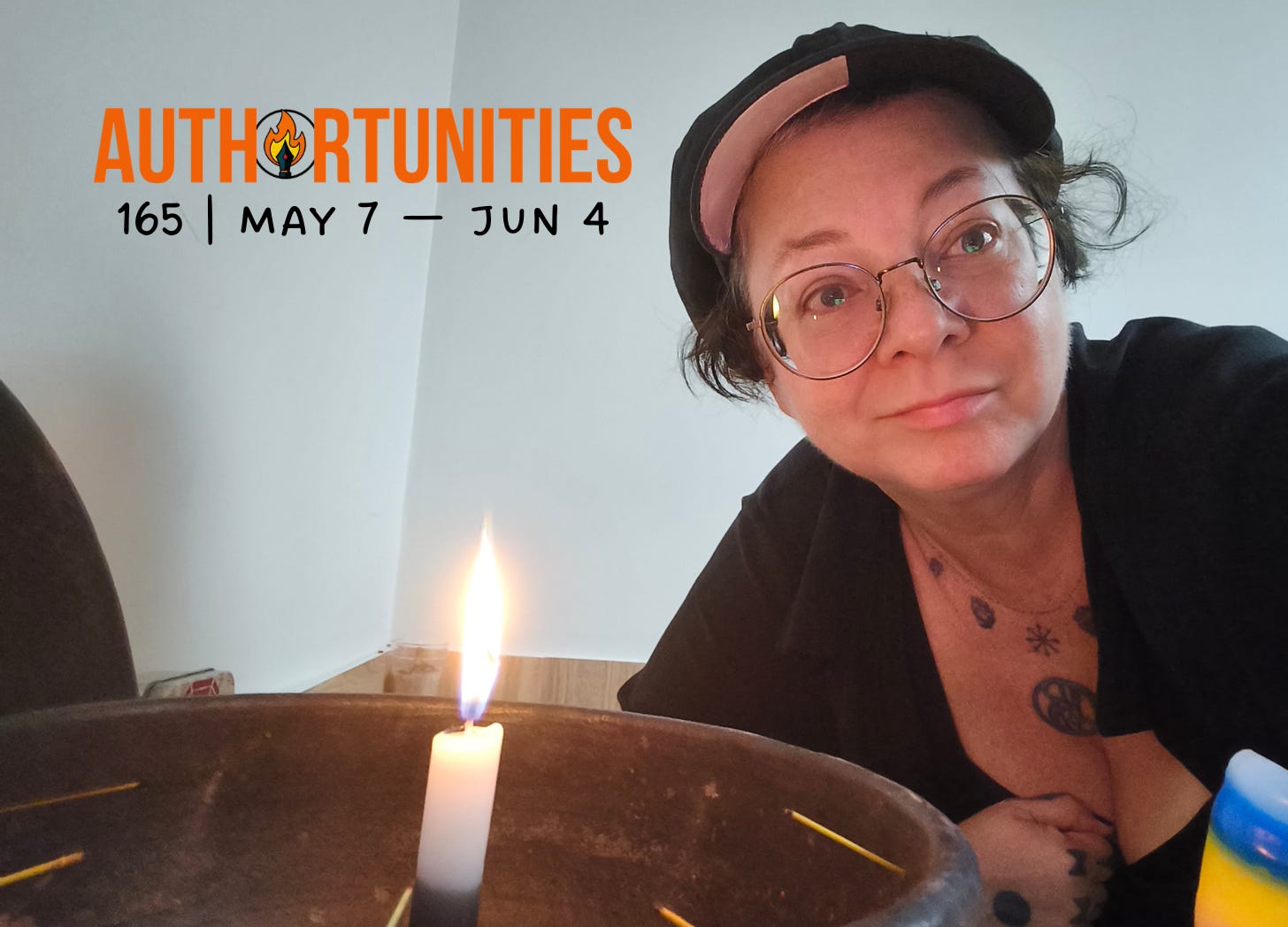
Why does rest feel like something we have to earn?
I tried to rest this week, emphasis on tried.
It was a busy week putting the final touches on four editions of the new Space and Time, doing two podcasts, teaching the Reedsy workshop, and answering enough messages to make my inbox start looking sentient. By Tuesday evening I decided I’d earned a night off.
My plan was to play games, eat junk food, and be magnificently useless.
I did eat the junk food, but then I somehow got sidetracked by cleaning up old magazine scans, because apparently my idea of “taking the night off” is preserving literary history with a plate of chicken nuggets balanced on one knee.
Which is an ironic way to begin a month themed Rest is Resistance, but that is exactly why I need this theme more than anybody. It’s not because I have mastered rest. Clearly. I am writing from the messy middle, where the work matters, and the deadlines are real.
I have a deeply ingrained habit of using work as a coping mechanism. When life feels overwhelming, I reach for my to-do list like others might reach for a cigarette or a drink. Sometimes I wonder if I didn’t replace tobacco and alcohol with tasks. The world often praises workaholics, but the truth? Work addiction can be just as damaging as any other.
I come from a long line of women with complicated relationships to work. I’ve inherited some of those patterns and, if I’m honest, passed them on to my kids. But together, my daughters and I are doing the work, learning to build healthier, more sustainable rhythms. It’s not easy, especially when my instinct is to bury my feelings under a 16-hour desk marathon.
I feel like that makes me the anti-expert on the topic: not someone who has mastered rest, but someone who keeps failing at it in highly educational ways.
Why Are We So Resistant to Rest?
This week I tried the 5 Whys, a root-cause analysis method from Toyota’s manufacturing culture that helps trace a problem past the obvious answer.
The idea is simple: when something is not working, ask why. Then ask why again. Then again. Five times, or as many as it takes to get beneath the surface.
So I tried it with rest:
Why do I resist resting?
Because I have so many things I want to do.
Why does that make rest feel difficult?
Because I won’t get them done. I’ll miss an opportunity.
Why does missing an opportunity feel so awful?
Because it might have been something really good. Duh.
Why does that feel so urgent?
Because that thing might be gone forever.
Why does that scare me so much?
Because one day I will be gone, and all that is left will be rest and I will never have another opportunity. 🤯
Well. That escalated quickly.
I realized I don’t resist rest because I’m lazy or bad at slowing down. I resist rest because I have so many things I still want to do, and rest can feel like letting an opportunity slip away forever. Underneath that is something deeper: the awareness that life is finite.
One day there will be no more deadlines, ideas, projects, conversations, or chances to make something meaningful. Rest feels like wasting precious time, but I’m starting to see that rest isn’t the opposite of a meaningful life. Rest may be what lets me actually be present enough to live it.
As writers, we are very good at diagnosing plot problems. We can look at a character’s behavior and say, “Ah, this is not really about the argument over breakfast. This is about abandonment, grief, fear, hunger, shame, longing.”
But when it comes to ourselves, we stop at the first answer. “I’m busy.” Maybe. But maybe, like me, we are also afraid.
That is a lot to carry into a blank page.
What I’m Learning the Hard Way
The upside to being the Failed-at-Chill Poster Child is that I’m beginning to see the pattern. When I refuse to rest, it usually isn’t because the task in front of me is truly urgent. It’s because rest asks me to trust that I’m not missing anything irreplaceable.
I have to have faith that the idea will still be there tomorrow, that the opportunity I miss was not the only one ever, and that my value doesn’t evaporate when I’m not producing. I have to trust that my work can matter without consuming me completely. That a meaningful life is not measured only by how much I manage to make before I’m gone.
That last one is my tender place.
One day there will be no more deadlines, ideas, projects, conversations, edits, submissions, acceptances, launches, or late-night bursts of inspiration, but that doesn’t mean every hour has to be spent chasing proof that we used our lives well.
A life is not only made meaningful by what we produce. It is also made meaningful by what we allow ourselves to experience while we are still here to experience it.
Rest is not the enemy of a meaningful life.
Rest is what lets us be present for one.
Try the 5 Whys With Me
So this week, instead of offering a tidy list of ways to rest better, I’m inviting us into a question. Ask yourself, if applicable:
Why do I resist resting?
Write the first answer. Then ask why again, and again, and again.
By Why #3, you are probably thinking this is stupid. By Why #5, you might be, like me, in tears.
The point isn’t to interrogate or shame yourself. We don’t need to turn self-reflection into another productivity exercise with a better font. Ask like you are sitting beside yourself, not standing over yourself with a clipboard.
Maybe the first answer will be practical.
I have too much to do.
I’m behind.
People need me.
The deadline is real.
The algorithm is hungry.
The inbox has become sentient and possibly hostile.
But keep going.
Underneath “I’m busy,” there may be fear.
Underneath fear, there may be grief.
Underneath grief, there may be love.
Underneath love, there may be the aching truth that we care so much about this one precious life, and we don’t want to waste it.
Rest as Resistance
This month, Rest is Resistance, not because rest fixes everything.
One quiet evening won’t dismantle our learned hustle culture and heal our frayed nervous systems but every intentional pause pushes back against the lie that we are only as valuable as our latest output.
Every pause says:
I am allowed to exist before I produce.
I am allowed to breathe before I answer.
I am allowed to live a life, not just document one.
I am allowed to make art from fullness, not only from fumes.
That is rest as resistance.
This Week in the Ecosystem
Supporting Subscribers will receive their archival copies of Space & Time 150 asap! Access to the online archive for all past issues is also almost ready. All this will come to you directly to your inbox.
✨The NEW issue of Space & Time is available for pre-order now!
📅Your Authortunities Calendar is updated weekly and available here.
☄️You can find April’s Space & Time 149 in paperback and ebook here.
🎙️Space & Time news every Tuesday on our weekly live podcast.
This was so helpful! I’ve always struggled with granting myself time to rest. The older I get, the worse it becomes as I feel like “time is running out” to accomplish what I want to accomplish.
I find I have to rest more as I've been recovering from medical procedures. Back ablation...not too much downtime. Migraines, bad. That rest time, you can't really do anything at all, it's just pain. Oral surgery I just had, major surgery. Lots of downtime. Just happened last week. Can't speak yet. Tired. Pain. But I can work a little at a time. Then I have to stop. The scary part when stopping, is: you face all the stuff you put off when you're working. Things that are personal, that you don't want to face. Like my Dad's declining health. Our relationship. Things in my life that I've pushed away because I don't want to think about them. You face yourself, your life. It's a lot of soul searching. But it's also a lot of discovery. Coming to terms. Finding peace. Or closure of some sort...even if it's not ideal. It gives time for creativity later you never thought about. Things that come up in your writing like second nature. It's very hard, very quiet, and also very enlightening. Through illness and pain, I found the strength to face myself.